

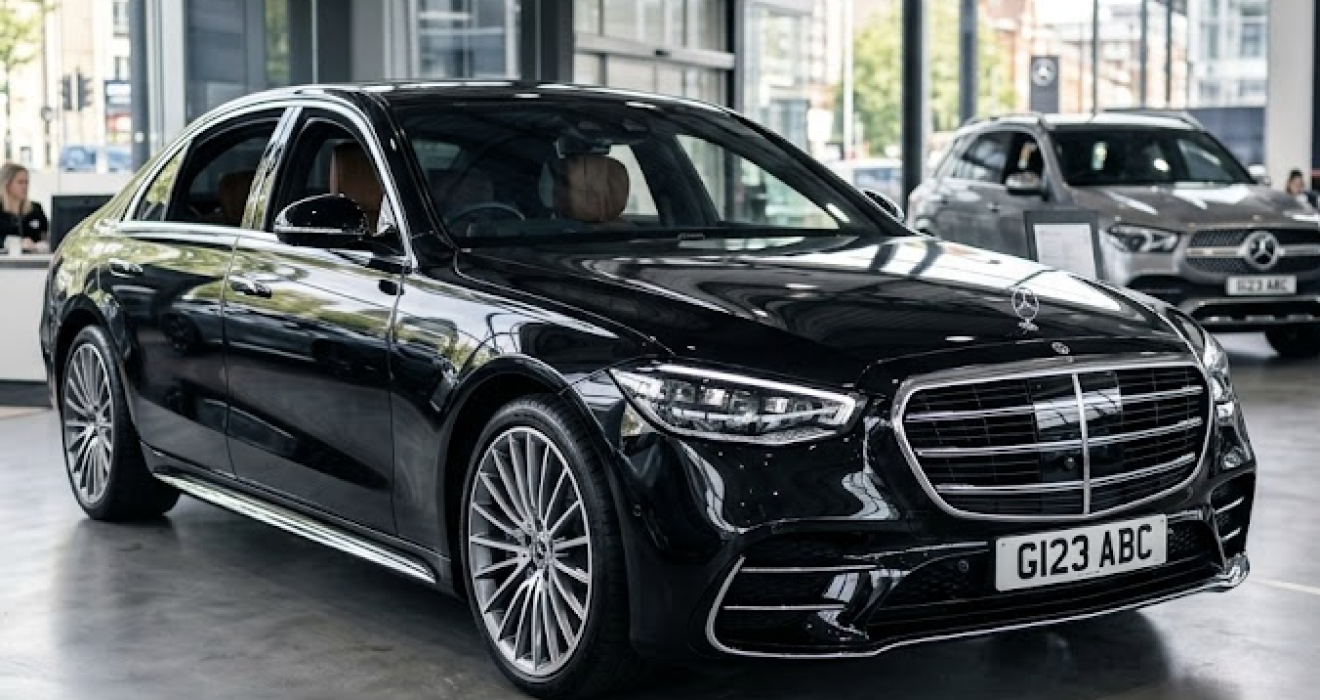
What is a Prefix Car Registration Number?
A prefix car registration is a UK number plate style in which the first letter indicates the year the vehicle was first registered. This system was used by the DVLA between August 1983 and July 2001, following the “Suffix” system and preceding the current “New Style” (e.g., AB51 ABC) format.
1 . The Year Identifier (The Prefix)Example: ‘A’ in A123 ABC
The very first letter tells you the car’s age. For example, ‘A’ represents 1983, while ‘Y’ represents 2001. Note: The letters I, Q, O, U, and Z were never used as prefixes.
2. The Unique Numbers 1 to 999
Following the letter is a sequence of 1, 2, or 3 digits. These numbers were assigned to make the registration unique to the vehicle.
3. The Three-Letter Suffix example: ‘ABC’ in A123 ABC
The final three letters are random identifiers, though the last two letters often indicate the original postal region where the car was registered.
3. Key Rules: Can I Put a Prefix Plate on My Car?
The most important rule for SEO and customer service is the “age-check” rule.
The Golden Rule: You cannot use a registration number to make a vehicle look younger than it actually is.
For example, you can put a G-prefix (1989) plate on a 2024 Tesla, but you cannot put a W-prefix (2000) plate on a 1995 Ford Fiesta.
Full Prefix Registration Year Table (1983–2001)
| Prefix Letter | Date of Release | End of Release |
|---|---|---|
| A | August 1, 1983 | July 31, 1984 |
| B | August 1, 1984 | July 31, 1985 |
| C | August 1, 1985 | July 31, 1986 |
| D | August 1, 1986 | July 31, 1987 |
| E | August 1, 1987 | July 31, 1988 |
| F | August 1, 1988 | July 31, 1989 |
| G | August 1, 1989 | July 31, 1990 |
| H | August 1, 1990 | July 31, 1991 |
| J | August 1, 1991 | July 31, 1992 |
| K | August 1, 1992 | July 31, 1993 |
| L | August 1, 1993 | July 31, 1994 |
| M | August 1, 1994 | July 31, 1995 |
| N | August 1, 1995 | July 31, 1996 |
| P | August 1, 1996 | July 31, 1997 |
| R | August 1, 1997 | July 31, 1998 |
| S | August 1, 1998 | February 28, 1999 |
| T | March 1, 1999 | August 31, 1999 |
| V | September 1, 1999 | February 29, 2000 |
| W | March 1, 2000 | August 31, 2000 |
| X | September 1, 2000 | February 28, 2001 |
| Y | March 1, 2001 | August 31, 2001 |
4. Why Are Prefix Plates So Popular?
Prefix registrations remain one of our best-selling categories for three reasons:
- Versatility: With 3 letters at the end and 1-3 digits in the middle, they are perfect for representing names (e.g., S88 TOM) or initials.
- Affordability: You can often find prefix plates starting from as little as £25 plus VAT and DVLA fees, making them an entry-level way to personalise your car.
- Classic Appeal: They are the “traditional” look for many UK car enthusiasts who grew up during the 80s and 90s.
5. Frequently Asked Questions
How much is a prefix plate worth?
The value depends on the combination. Common initials are cheaper, while single digits (e.g., A1 ABC) or plates that spell out words can be worth thousands of pounds. Use our Free Valuation Tool to check yours.
Is a prefix plate the same as a ‘dateless’ plate?
No. A dateless plate (e.g., 123 ABC) has no year identifier and can go on any vehicle of any age. A prefix plate (e.g., A123 ABC) has a clear year letter and is subject to the age-check rule.
Where can I buy a prefix registration plate?
Prefix number plates are widely available on our website for immediate purchase and some specialist prefix plates can also be bought via number plate auctions. We usually have an auction running at all times.